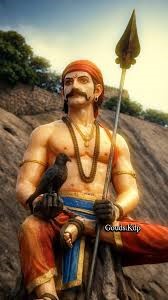
Sardar Sarvai Papanna Goud
c. 1650 - 1709
Remembered across AP & Telangana as a 17th-century warrior, a challenger of imperial authority, and an enduring symbol of dignity and self-respect for the Goud community and other historically marginalised groups.



Who Was Papanna?
By tradition, Papanna Goud was born around 1650 and is closely associated with Khilashapur, in present-day Telangana. He is remembered as someone who rose from within the Goud community to become a significant local leader and military commander - at a time when access to power was tightly controlled by established ruling elites.
Across local memory and regional accounts, he is described as someone who resisted Mughal authority in the area and who positioned his struggle as one for dignity and opportunity for communities that had long been excluded from power.
Why He Matters
Papanna's significance lies less in formal court chronicles and more in how he is remembered by people across the region - as a grassroots hero rather than a conventional monarch. Local tradition links him to guerrilla-style resistance and fort-building, with accounts connecting his activities to the wider Warangal and Golconda region.
For communities like the Gouds, his story has become a touchstone for social assertion - a reminder that leadership and resistance to injustice were not the preserve of any single class or caste.
Places Linked to Papanna
Khilashapur Fort (Qila Shapur)
The fort at Khilashapur - sometimes written as Qila Shapur or Quilashapur - is the strongest physical link to Papanna's story, as it directly ties him to a site that still stands today. Recent reporting describes restoration work being carried out at the fort, alongside efforts by the Telangana government to develop Papanna's native village as a heritage and tourism site.
A Life in Outline
c. 1650
Born in the Khilashapur region of present-day Telangana, within the Goud community.
Mid-late 17th century
Rose to prominence as a local leader and military figure, associated by tradition with resistance to Mughal authority and with fort-building in the wider Warangal-Golconda region.
c. 1709
Traditionally remembered as the year of his death, marking the end of a life that has since become central to regional memory.
Legacy Today
Papanna's birth anniversary has been marked as an official state function in Telangana, with district-level observances and government recognition. More recently, the Telangana government has announced plans for a statue of Sardar Sarvai Papanna Goud at Hyderabad's Tank Bund - a sign that his place in public memory continues to grow.
For the Goud community and many others across Telangana, Papanna remains a powerful symbol of courage, resistance, and self-respect.
A Note on These Accounts
Much of what is known about Papanna comes through a combination of oral tradition, local memory, and official commemoration, rather than a single agreed historical record. This page draws on material that is locally remembered (passed down through community tradition), historically reported (covered in regional press and heritage writing), and officially commemorated (recognised through state functions and government initiatives). Where sources differ on specific details, this page favours the broader, widely-shared picture over disputed specifics.